

EN
EN
Amrita Sher-Gil
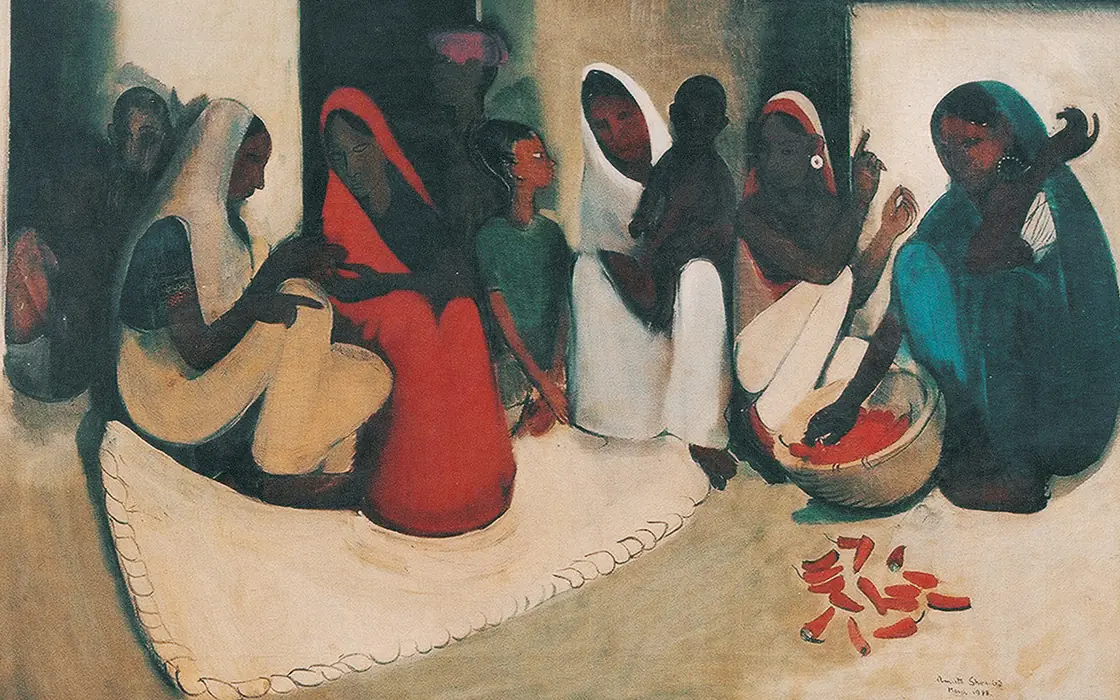
Amrita Sher-Gil occupies a formative position in the history of modern Indian art. Trained at École des Beaux-Arts in Paris, she initially produced academic portraits in the European tradition, but her return to India in the 1930s marked a decisive shift in both style and subject. Her later work engages with rural Indian life, drawing compositional influence from Pahari miniatures and Mughal art, while retaining a subdued post-impressionist palette. Sher-Gil’s representation of women often introspective and dislocated from narrative challenges romantic or ethnographic framings of the Indian subject. She self-consciously positioned herself within the modernist discourse, maintaining critical distance from colonial and nationalist aesthetics alike. Her writings and correspondence reveal an evolving awareness of her hybrid identity and its artistic implications. Though her career was brief, Sher-Gil’s practice reflects early articulations of gender, identity, and artistic autonomy prefiguring many of the concerns that would later define Indian modernism.